Composting 101: How Does Composting Work in Boston? ♻️
Posted: 7/22/26 – Written By Allison Gee and Spencer Robinson, Volunteers for the DFC Programming & Outreach Committee
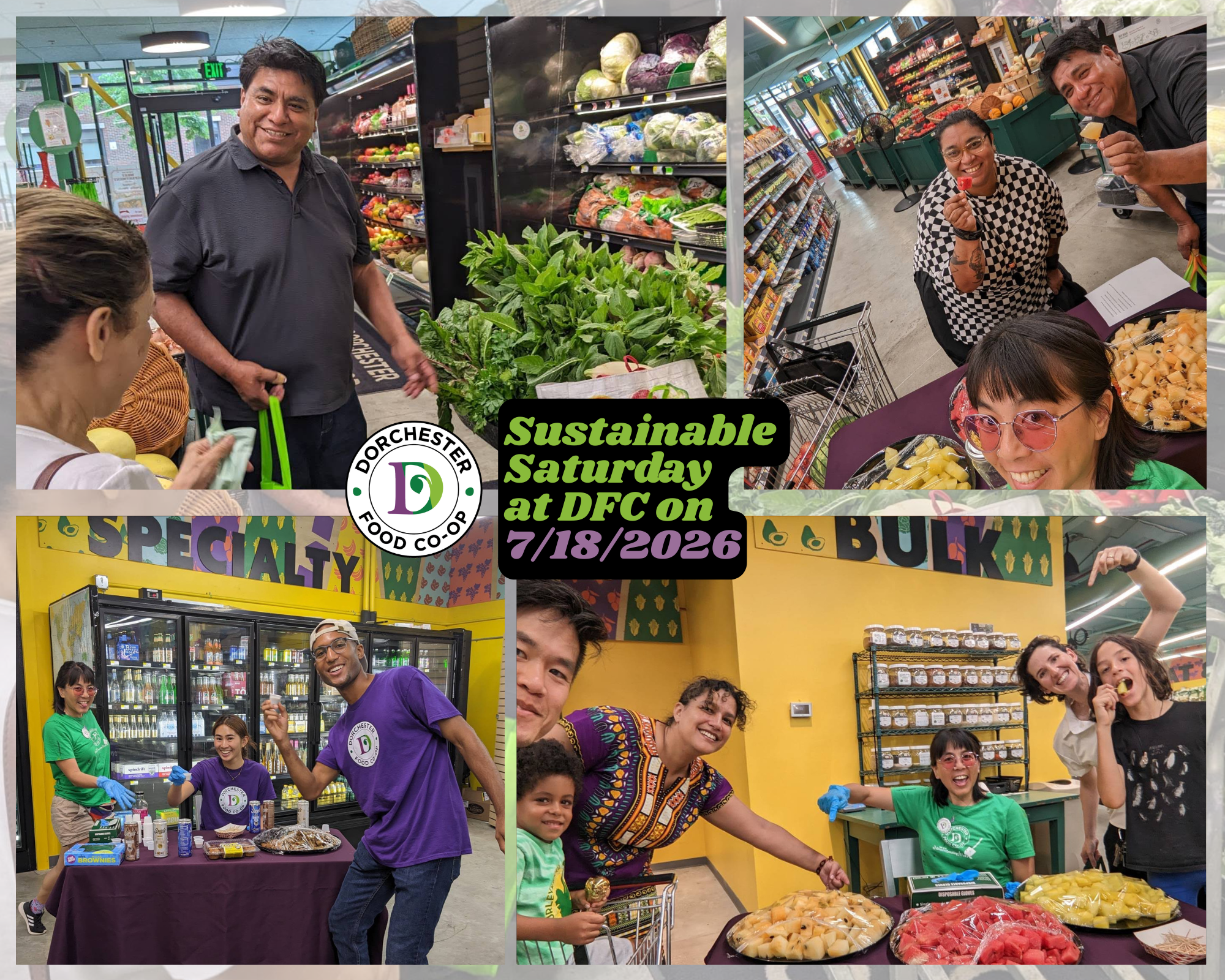
July 18, 2026 – Sustainable Saturday, including Composting 101 at Dorchester Food Co-op
Last Saturday, the Dorchester Food Co-op kicked off summer with their first-ever Sustainable Saturday event! The event included food sampling, carpooling, and most notably, a composting workshop hosted by fellow Ujima Good Business Alliance member CERO Cooperative. CERO is a worker-owned composting company focused on commercial composting around Boston.
They graciously hosted a community presentation, teaching DFC shoppers the environmental benefits of composting, as well as different ways you can compost in Boston. If you missed the workshop, there is no need to fret because I created a quick SparkNotes version of everything I learned about composting so you can start composting too!
What is composting?
Composting is the natural process of turning food waste back into soil. The city of Boston recommends composting old food scraps, egg shells, house plants, coffee grounds, paper, and more. Composting is important because it can help build healthy soil and has major benefits in combating global warming. However, most people don’t know that by not composting, you are adding to global gas emissions. When you don’t compost your food scraps, they end up trapped in landfills, where they don’t have the correct nutrients to turn back into soil. In turn, these scraps end up producing methane gas, contributing to our global gas emissions.
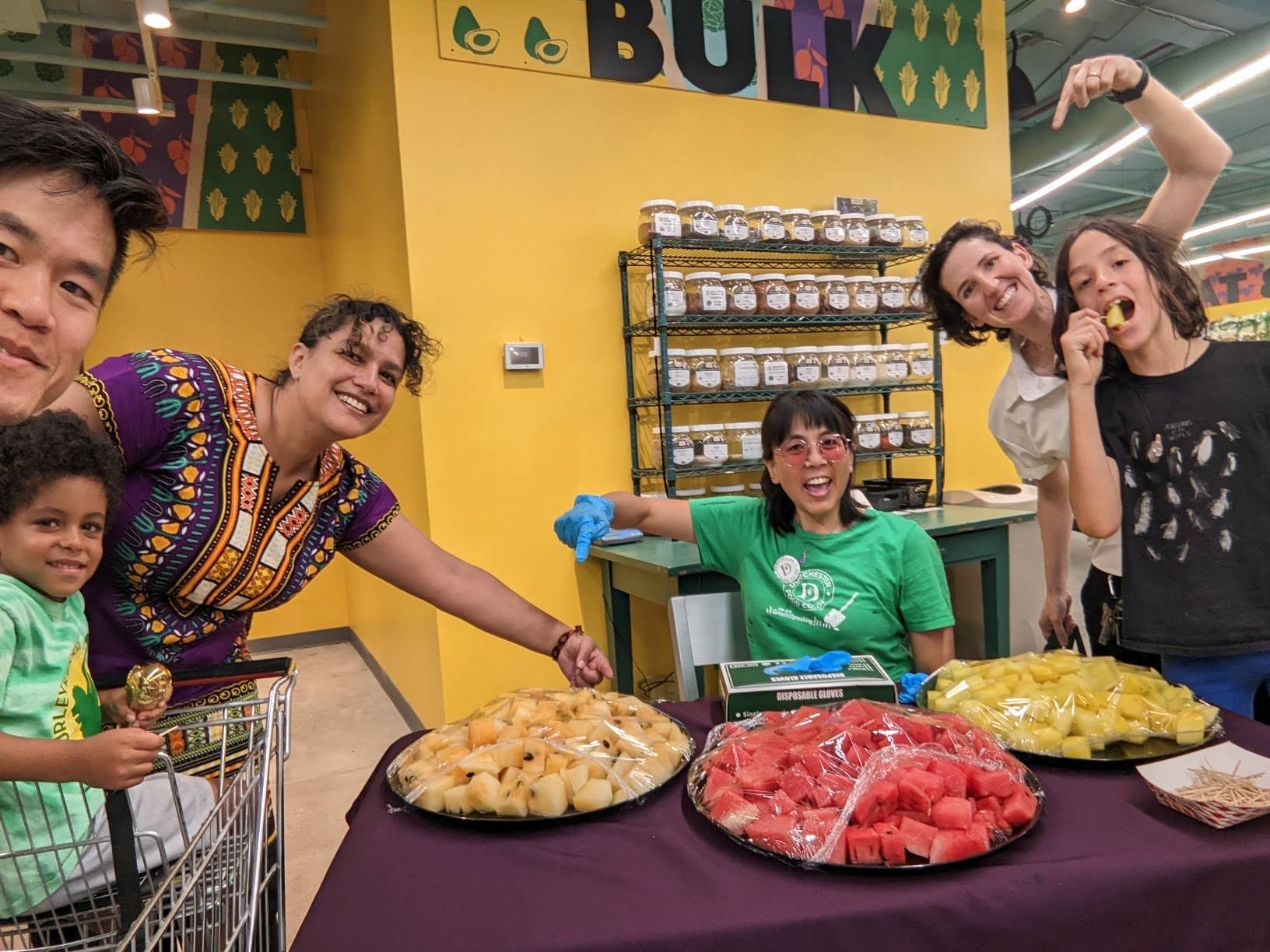
Yellow watermelon anyone? Sampling Saturday is every Saturday at DFC. Kids are VIP at the Co-op: FREE FRUIT STAND!
Okay, so now the real question: how can I compost?
Currently, the city of Boston is piloting its curbside composting program. At the moment, there is a waitlist to join the program until it's implemented throughout the entire city. While the status of city-wide composting is still unknown, there are 24-hour composting sites available throughout Boston. These sites are called Oscar boxes and are large green composting boxes that can be unlocked using the code 2-1-4. For Dorchester residents, the Codman Square Library is a popular composting site.
If you don’t want to go to a composting site, another option is backyard composting. To properly backyard compost, you need the right balance of carbon, nitrogen, oxygen, and water. When composting at home, avoid putting meat, meat bones, and dairy in these bins.
To start composting:
Get a composting bin
You can buy one either online, or there are some people that make their own. I’d recommend getting one with a turning mechanism; these are called compost tumblers.
Add a layer of brown leaves
You want to start with a layer of dry leaves at the bottom. You can also use straw or shredded paper instead of leaves.
Add your compost
After, you want to add your compost scraps on top of the leaves.
Cover compost with brown leaves
Add water
Just sprinkle some water, you want your pile to be damp, not soaked.
Repeat layering until bin is full
Turn your compost bin every 3-7 days
If you have a tumbler, you can just turn the handle a few times. If you’re using a pile or bin, you can mix the compost using a pitchfork or other gardening tools.
Continue turning until waste transforms into fertilizer for your soil.
This could take anywhere from a few weeks to a few days, depending on your load, turning frequency, and climate.
Composting is a great way to do your part in helping the environment and do your part in putting your food waste back into the circular food economy. Happy composting!
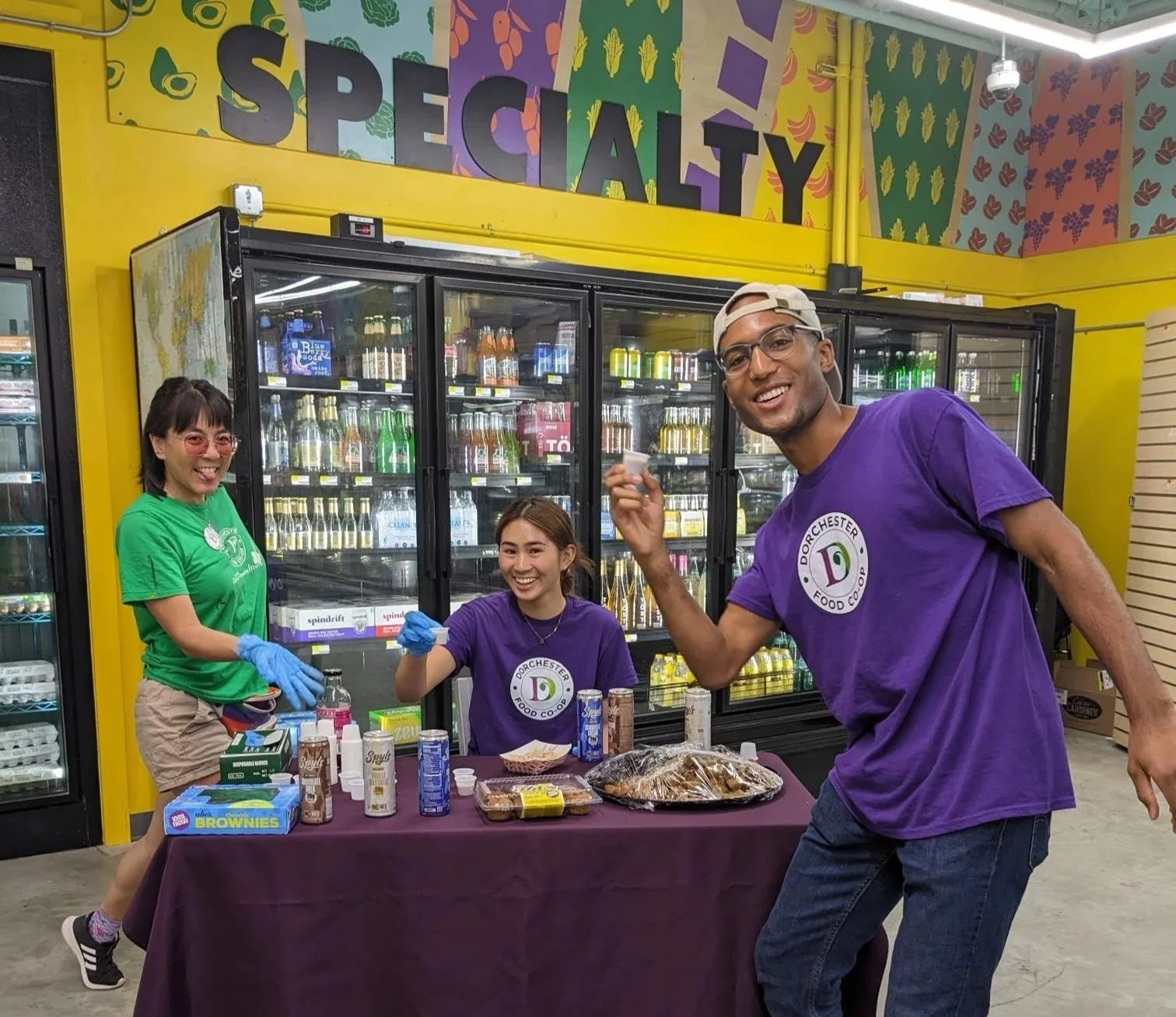
Left to Right: Miriam Gee, Allison Gee, Spencer Robinson
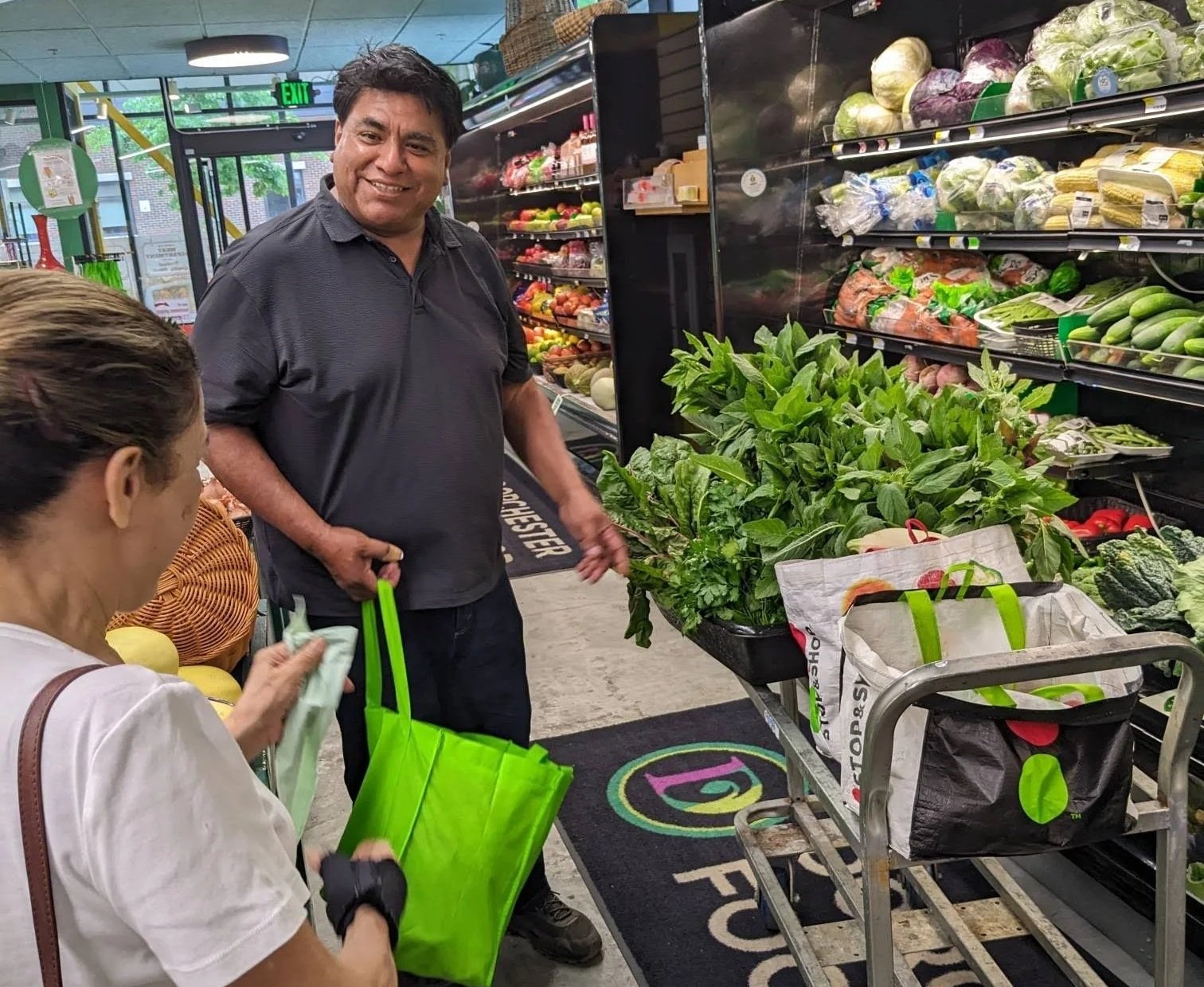
In grey: Marcos, former DFC Board President, next to our produce case at DFC
_
Authors & Sources:
CERO Co. presentation: https://docs.google.com/presentation/d/1mqw54KeFP9i2HIQoIUpVpTjw7kqx-8IsjjVKItzkO7I/present?slide=id.p
City of Boston: https://www.boston.gov/sites/default/files/file/2022/06/2173-09-compost%20guide-5%2C5%20x%208%2C5-%20PRINT.pdf ; https://www.google.com/url?q=https://www.boston.gov/departments/public-works/project-oscar&sa=D&source=docs&ust=1784753030556790&usg=AOvVaw2wizpdcmlX5pA1S0yjfiav